

Critical path method in Project Management (CPM)
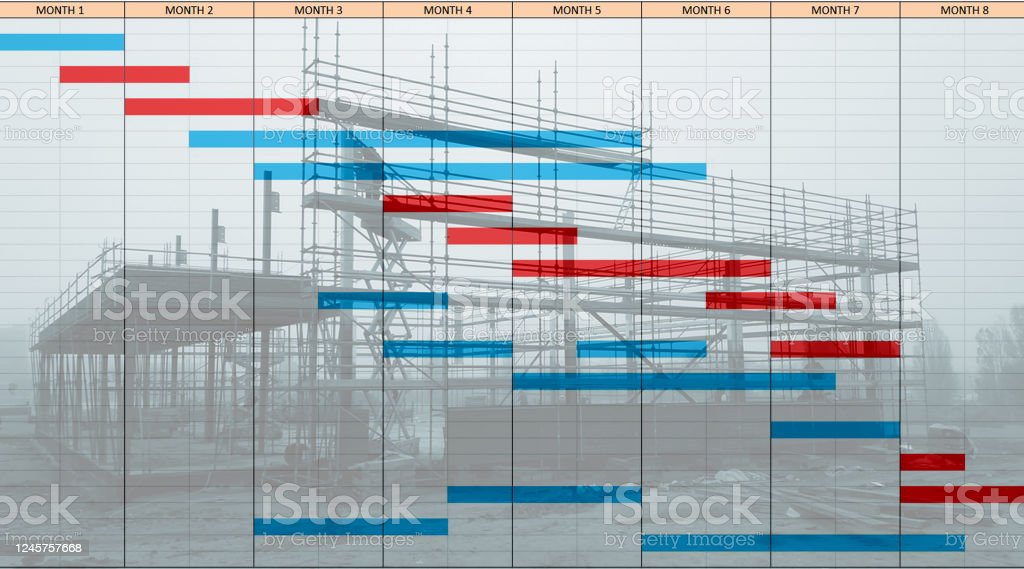
Critical path is called as the longest path in project management. As the name reflects critical synonyms to Crucial or vital, we can think it like as “A path with thorns” ,which path have the all hurdles & challenged to be faced to reach the end result/goal.
Introduction
A healthy project lifecycle leads business to effective results. CPM involved mapping out critical tasks necessary to complete the project.
In this post we will talk about power of CPM, real life example & tools. Let’s start a theoretical look.
Definition of critical path project management
Critical path is the longest sequence of tasks that must be completed to execute a project. The tasks on the critical path are called critical activities because if they’re delayed, the whole project completion will be delayed. To find the critical path, project managers use the critical path method (CPM). CPM is a technique for scheduling project tasks and activities. In this method each activity is arranged in sequential order along with time estimate.
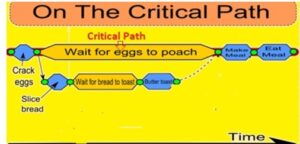
Now here is a real life example. Consider the task of making breakfast. Eggs need to be poached, toast needs to be grilled and buttered, However, obviously these tasks depend on each other. Eggs cannot be poached before they have been cracked. There is not point buttering the toast before it has been toasted. In this example first path is more time consuming & longest path to reach the end goal, i.e. eat meal. Hence first path will be called as critical path in this example.
The scheduling diagram for this example looks something like this:
Advantages of Critical Path Project Management
The critical path method offers the PM’s the ability to stay on budget more easily, schedule manpower and resources efficiently, monitor progress, monitoring and reporting the project progress and keep checking if any scope creep is there.
Here is a detailed view of these benefits for critical path method.
Budget Control
With a clear path to ensure the project finishes on time, you reduce wasted time that adds to your human and other resources budget. For example, if there is float time around one task, you can relocate employees to critical path activities, thereby reducing costly busy work or idle time. A clear breakdown of your project also makes it easier to allocate other resources to the right place at the right time, thereby cutting inventory storage costs.
Effective Scheduling
In addition to pulling manpower off tasks with lots of float time as needed, project managers can also allocate manpower strategically to tasks that have float time. For example, they may assign employees who are still going through a learning curve to tasks with float time so these employees may take their time learning new skills. Alternatively, more experienced employees can be assigned to critical path tasks that don’t come with zero float.
Effective resource management
The critical path method helps project managers know exactly when every activity must be completed and, by extension, when resources are needed to complete them. As such, resource allocation should be prioritized at any given point in the project. More importantly, it is easy to know when resources can be redirected away from activities that can wait so they can be used to complete critical tasks.
Effortless Project Monitoring
The critical path method requires project managers to break down the project into progress chunks using clear project Gantt charts, usually MS Project & Primavera P6 are used for creating the project schedule & monitoring the project progress. It also breaks down the project schedule so that project managers can quickly see if they are at the right point in the project on any given day and, if so, they are scheduled to complete the project on time.
We will talk more about examples of critical path method in our next blog.
